
Bronchiolitis
What is bronchiolitis?
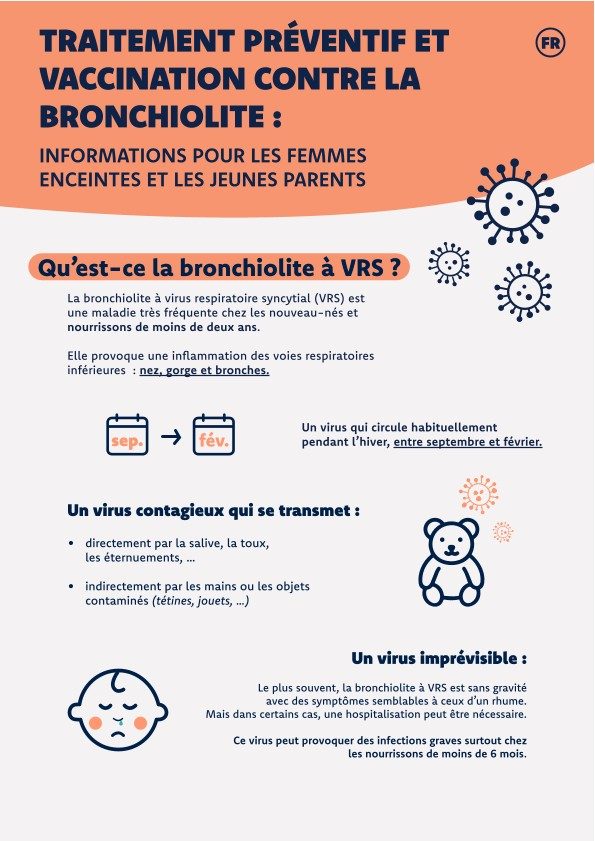
Bronchiolitis is a very common viral respiratory infection in infants under two years old. The respiratory syncytial virus (RSV), its main cause, can also cause serious respiratory infections in older adults. Bronchiolitis occurs mainly during the winter months and causes inflammation of the airways: nose, throat, and bronchi.
RSV is a highly contagious virus. The incubation period for an infection is 2 to 8 days. RSV infection usually begins with a simple cold, which clears up in a few days.
It can be very virulent in some cases, so it is important to remain vigilant:
- Follow appropriate preventative measures.
- Pay close attention to the appearance of symptoms.
- Consult a doctor if in doubt
Infection prevention
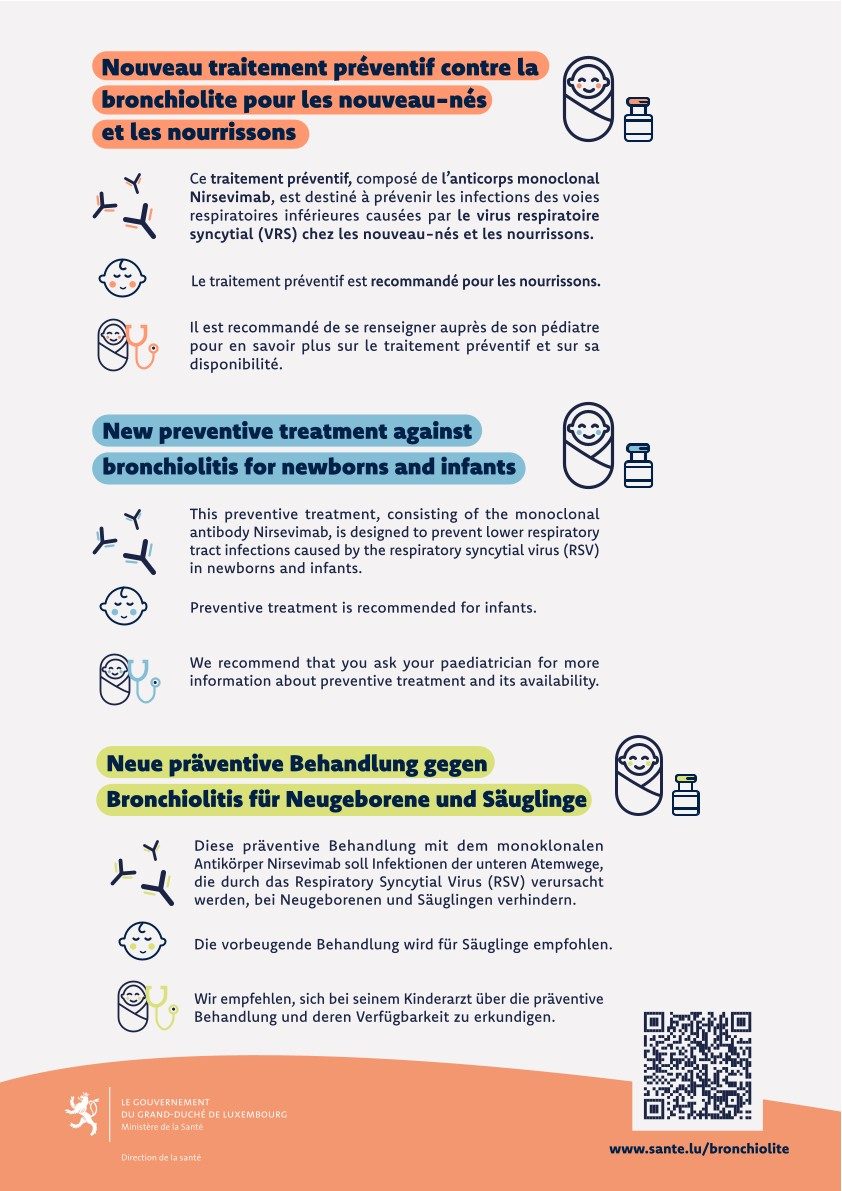
Prevention relies on barrier measures and vaccination of the most at-risk populations, particularly pregnant women to protect their newborns, people aged 65 and over with chronic illnesses or comorbidities, and all people aged 75 and over.
In infants: Bronchiolitis
In infants, the bronchi are small and more easily obstructed by secretions, which sometimes leads the child to exert significant effort to breathe. A baby who breathes more rapidly can then become exhausted quickly.
Who is affected and which children are most at risk of contracting a severe form of bronchiolitis?
Bronchiolitis affects children under the age of 2.
Particular vigilance is required in relation to children in the following categories:
- premature babies whose airways are still more vulnerable,
- infants under the age of 6 months,
- children with a chronic illness – particularly a respiratory, cardiac or neuromuscular disease.
How is the virus transmitted?
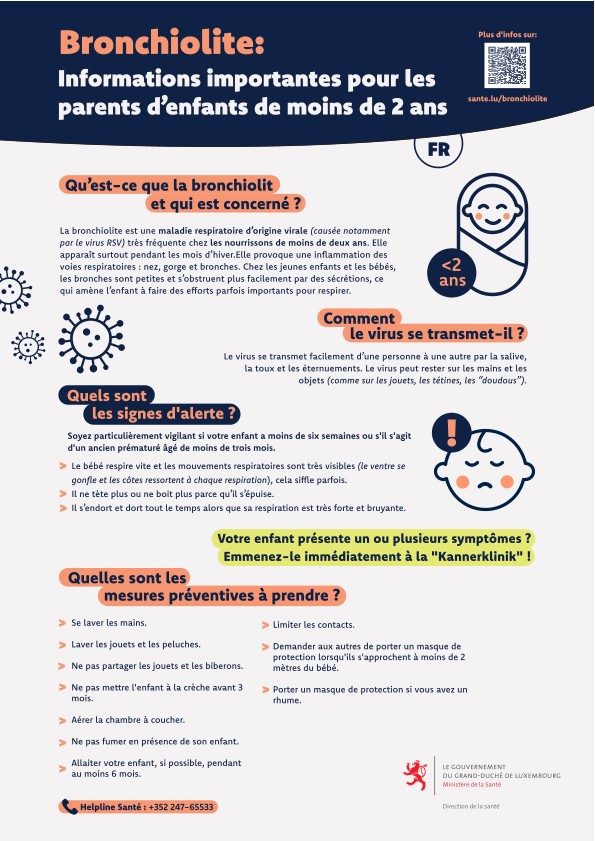
The virus is easily transmitted from person to person through saliva and through coughing and sneezing. The virus can live on people's hands and on objects (such as toys, pacifiers and comforters). Adults and older children who carry RSV generally have few symptoms, like a common cold. As a result, many people carry the virus and are contagious without knowing.
What are the warning signs?
Be particularly vigilant if your child is less than six weeks old or if you have a premature baby who is less than three months old.
- The baby will breathe quickly and the respiratory movements will be clearly visible (stomach will fill with air and the ribs will be drawn in with each breath); breathing might sound wheezy.
- The baby will stop feeding due to exhaustion.
- The baby falls asleep and sleeps a lot, while breathing very obviously and noisily.
Protective measures
- Wash hands regularly for 30 seconds with soap and water before any contact with an infant, particularly before and after changing them, after blowing your nose, before breastfeeding, before giving a bottle, before meals, and when children return home from school. If this is not possible, disinfect with an aqueous-alcoholic solution.
- Wash toys and comforters regularly.
- Do not share toys or bottles.
- If possible, avoid putting the child in a creche or nursery before the age of 3 months.
- Regularly air the child's bedroom.
- Do not expose the child to cigarette smoke.
- Breast milk contains antibodies which help to protect against RSV. Breastfeeding for at least the first 6 months and ideally for the first 2 years of a child's life is beneficial.
- Limit the child's contact with other children. Avoid very busy places and events. If the child is unwell, it is recommended that they do not attend nursery to limit contact.
- Ask other people to wear a mask when within 2 metres of the baby.
- If you have a cold, wear a face mask when engaging with the child.
Adult Respiratory Infections
The first signs of RSV infection in adults are similar to those seen in infants, but are usually less pronounced. Symptoms often resemble those of the flu and can range from a simple cold to a lung infection:
- Fever ≥ 38°C (100.4°F), sometimes absent in older adults;
- Muscle aches, headache, and a general feeling of being unwell;
- Signs of upper respiratory tract infection: sore throat, hoarse voice;
- Signs of lower respiratory tract infection: cough, sputum production, shortness of breath, and chest pain
Last update