
Tobacco control in Luxembourg
To combat smoking effectively, Luxembourg has taken a number of measures to better protect the population against the harmful effects of tobacco.
These measures take different forms:
- prevention,
- legislative measures,
- National Plan to Combat Smoking,
- stop smoking programme.
Prevention
Prevention plays a vital role in combating smoking. It involves making the population, and young people in particular, aware of the dangers of tobacco and preventing them from starting smoking in the first place. Young people are, after all, often the most easily influenced and the most vulnerable when it comes to tobacco and the temptation to try that 'first cigarette'.
According to the 2014 HBSC-LUstudy (Tobacco Factsheet), half of smokers aged 17-18 started smoking before they were 15, and the highest proportion of smokers is found in the 18-34 age group.
The aims of prevention are as follows:
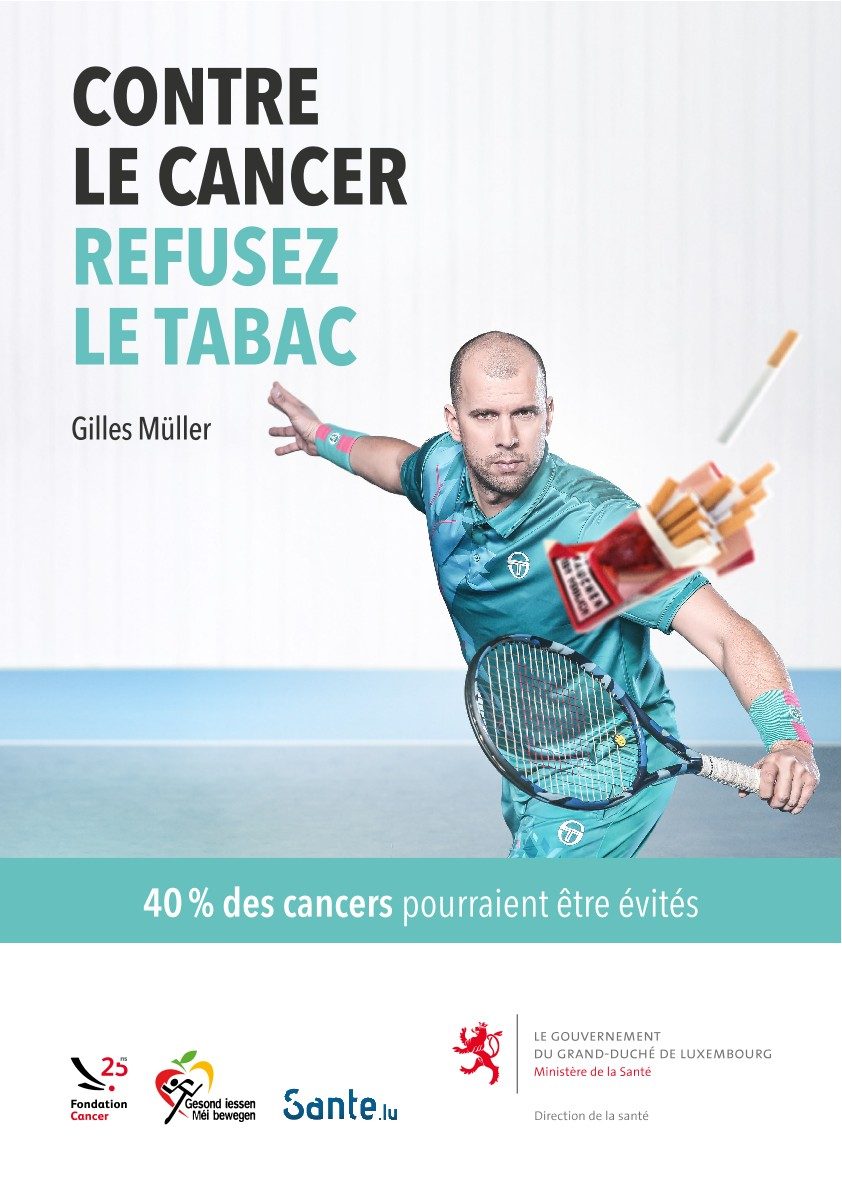
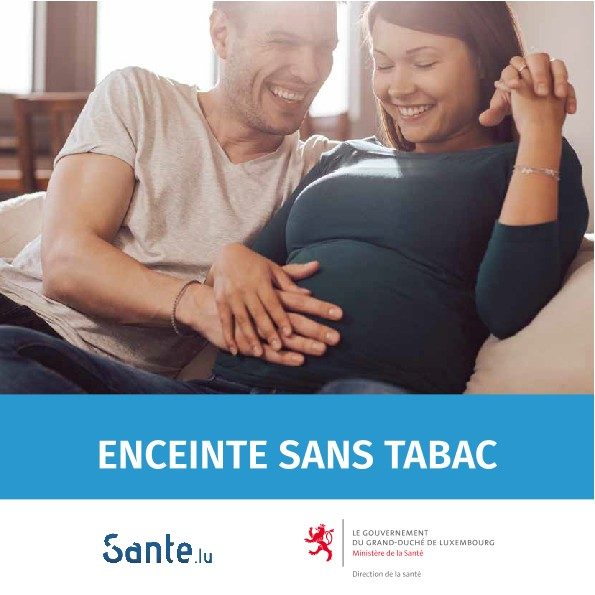
- organising regular national anti-smoking campaigns targeting young people, pregnant women, the general population and smokers;
- stopping young people picking up their first cigarette;
- regulating access to tobacco and vaping products;
- prohibiting the advertising of tobacco and of tobacco and vaping products;
- making the public aware of the serious health risks associated with using tobacco and vaping products;
- combating passive smoking;
- making adults aware of their responsibility towards young people.
The prevention campaigns aim to:
- inform the population about the health risks associated with smoking,
- help young people and children resist the temptation to start smoking,
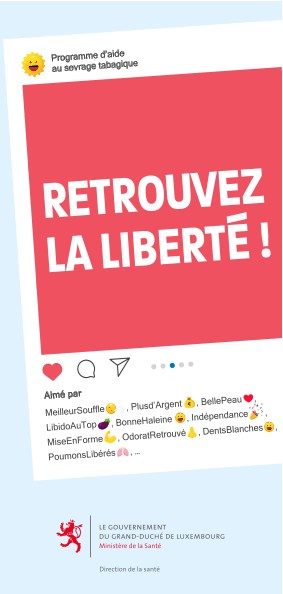
- help smokers give up smoking.
World No Tobacco Day
In 1987, the Member States of the World Health Organization (WHO) launched World No Tobacco Day to inform people about the risks of using tobacco. World No Tobacco Day is celebrated around the world on 31 May each year. World No Tobacco Day is an opportunity for the Ministry of Health, in partnership with the WHO, to continue raising awareness of the health risks linked to tobacco use and to reaffirm its commitment to the fight against smoking.
The role of parents in combating smoking
Parents play a decisive role in combating smoking:
- by setting a good example for their children;
- by taking the necessary steps to ensure their children are not exposed to tobacco smoke (passive smoking), whether at home, in the car or in any other enclosed space;
- by following the rules in places where smoking is banned, parents teach their children to show respect for non-smokers.
- All parents who smoke and know how difficult it is to quit, as well as how harmful cigarettes are to health, should encourage their children not to start smoking, explain the risks associated with tobacco use and make clear that it is a toxic product that is very difficult to give up.
All parties in society are also encouraged to get involved in the fight against smoking, in particular healthcare professionals who are in contact with patients in medical practices or hospitals, but also teachers, policy makers and staff in the care and health sectors, etc.
Legislative measures
Legislative measures are a key pillar in the fight against smoking. They make it possible to regulate and control tobacco products more effectively:
Grand-Ducal Regulation of 20 June 2017
To try to limit the toxicity of these products, the Grand-Ducal Regulation of 20 June 2017 (transposing the European Tobacco Products Directive (2014/40/EU)) restricts the maximum emission levels for tar, nicotine and carbon monoxide of existing and new tobacco products to 10 mg for tar, 1 mg for nicotine and 10 mg for carbon monoxide, per cigarette.
The law of 13 June 2017, amending the amended law of 11 August 2006 and transposing European Directive 2014/40/EU,
prohibits the use of certain substances (Article 7):
- with a characterising flavour;
- containing any technical features allowing modification of the smell or taste of tobacco products or their smoke intensity;
- containing vitamins or other additives that create the impression that a tobacco product has a health benefit or presents reduced health risks;
- containing caffeine or taurine or other additives and stimulant compounds that are associated with energy and vitality;
- containing additives having colouring properties for emissions;
- containing additives that facilitate inhalation or nicotine uptake;
- containing additives that have properties that are carcinogenic, mutagenic or reprotoxic in unburnt form;
- containing flavourings in any of their components such as filters, papers, packages or capsules, or any technical features allowing modification of the smell or taste of the tobacco products concerned or their smoke intensity. Filters, papers and capsules must not contain tobacco or nicotine.
strictly prohibits tobacco-product advertising and sponsorship, except at points of sale and in the form of the product and brand name, and introduces new measures for tobacco products that go beyond the scope of the European Directive, with the aim of better protecting the health of non-smokers, in particular children, and preventing young people from starting smoking by banning smoking and vaping in the following locations:
- play areas,
- sports venues, when minors under 16 years of age are playing sport,
- any private vehicle in the presence of a child under 12 years of age,
- ban on the sale of tobacco products and electronic cigarettes to persons under the age of 18,
- ban on vaping in places where it is prohibited to smoke.
requires health warnings and additional warnings to be displayed on tobacco products and shocking images to be displayed on cigarette and roll-your-own tobacco packets.
Measures to protect people from passive smoking
The law establishes the right of non-smokers to breathe clean air, by introducing a blanket ban on smoking in all public places.
- With regard to smoking in the workplace, Art. L312-2.(3) of the Labour Code stipulates that the employer must take all measures necessary to guarantee and improve the protection of the physical and mental health of employees, in particular by guaranteeing sufficiently ergonomic working conditions, avoiding repetitive work as far as possible, organising the work appropriately, and taking the measures necessary to protect employees effectively from the tobacco smoke of others. Tobacco is not only a public health problem, but also an occupational health and safety problem, and employers must take all measures necessary to guarantee or improve the physical and mental health of workers, in particular by taking the measures necessary to protect workers effectively from the tobacco smoke of others.
- The Inspectorate of Labour and Mines (Inspection du travail et des mines - ITM) has produced a guide on smoking policies in the workplace (guide pour une politique en matière de tabagisme en entreprise).
- Fondation Cancer also offers modules and tools for businesses.
National Plan to Combat Smoking
With the National Plan to Combat Smoking 2016-2020 (Plan national de lutte contre le tabagisme - PNLT), the government has committed to implementing this national plan and intends to introduce positive measures to accompany the entry into force of the new smoking law. This plan was drawn up by a group of 25 national experts representing various institutions:
- Luxembourg Cardiology Society
- National Cancer Institute
- Luxembourg Pulmonology Society
- National Health Fund (CNS) - Department of Supplies and Preventive Medicine
- Centre for the Prevention of Drug Addiction (CePT)
- Association of General Practitioners
- Customs and Excise Agency
- National Association of Luxembourg Nurses (ANIL)
- Fondation Cancer
- Ministry of Health - Legal Department
- Ministry of Finance
- Ministry of the Economy
- Coordinating Body for the National Cancer Plan
- Health and Social Welfare League
- Ministry of Education, Children and Youth
- Health Directorate
- Preventive Medicine Division
- Medicine in Schools Division
- Epidemiological Department
Aims of the PNLT
- To reduce the prevalence of smoking;
- To reduce the use of shisha amongst young people between the ages of 15 and 24;
- To double, within 5 years, the number of people participating in a programme to help them stop smoking completely;
- To reduce tobacco-related deaths over the long term, by 2040;
- To create a favourable environment for the population that helps prevent smoking and helps people give up smoking for good;
- To protect young people and prevent them from starting smoking;
- To help people who want to stop smoking to kick the habit for good;
- To offer prevention and smoking cessation treatment programmes using professional practices based on scientific insights acquired from the study of nicotine addiction;
- To improve knowledge, regularly evaluate the steps taken and adapt the national plan and associated actions.
Structure of the PNLT
The plan is made up of 5 priority areas:
- Priority 1: governance of the fight against smoking
- Priority 2: promotion of health and prevention of smoking
- Priority 3: help to quit smoking for good
- Priority 4: training of professionals
- Priority 5: research and evaluation
Stop smoking programme
To provide tailored support to smokers who wish to give up smoking, the Health Directorate has signed an agreement with the National Health Fund (CNS) on the implementation of a stop smoking programme.
The stop smoking programme has been developed in accordance with WHO recommendations.
Smokers who want to quit can receive advice and support from a healthcare professional of their choice. Financial support is also made available for the purchase of medication to support smoking cessation.
How do you take advantage of the stop smoking programme?
- The patient makes an initial appointment with the doctor of their choice, such as their GP, who registers them for the stop smoking programme. The cost of this initial consultation is reimbursed fully by the CNS (code E40).
- During this initial consultation, the doctor assesses the nicotine dependence of the patient concerned, together with the patient. They then develop a smoking cessation strategy together. The most appropriate medication is prescribed (form A).
- The patient retains all the invoices for the smoking cessation medication prescribed.
- The patient can consult their doctor as necessary throughout the period of the smoking cessation programme. A final consultation is held in the eighth month. This allows the process to be reviewed with the patient and allows the patient to claim reimbursement for their smoking cessation medication. The doctor completes form B of the stop smoking programme and signs it off. It should be noted that having the cost of medication reimbursed is not dependent on successfully giving up smoking. The cost of this final consultation is also reimbursed fully by the CNS (code E45). Medication is reimbursed at a rate of 50 %, up to a cap of €100.
- After the final consultation, the patient sends all the invoices that they have kept throughout the stop smoking programme by post to the Health Directorate to obtain reimbursement.
Certain doctors and other healthcare professionals have received training in the area of nicotine addiction and can provide even better advice and support to patients while they are trying to give up smoking.

Last update