
AIDS
AIDS is an infectious disease caused by the human immunodeficiency virus (HIV). The first cases of AIDS appeared around forty years ago. Although rapidly fatal in the 1980s, it is now considered a chronic disease, owing to the development of improved therapeutic strategies. However, there is still no cure or universal method of prevention.
Immune system
The immune system – our defence mechanism against infections caused by viruses, bacteria, parasites, etc. – helps to keep our bodies in equilibrium with external organisms, while at the same time providing an environment that allows our body's organs to function properly. The functioning of the immune system is complex, and involves cells (such as white blood cells), free molecules (such as antibodies), and other chemical messengers that control inflammation or activate white blood cells. Antibodies and white blood cells are mobile, and are found almost everywhere in the body.
HIV
In the days following contamination, the HIV virus actively replicates and spreads throughout the body, including in the central nervous system.
The HIV virus preferentially targets CD4 lymphocyte cells (a type of white blood cell). These cells play a defensive role and prevent infection by viruses, parasites or bacteria that the body is normally very good at controlling. The virus gets into these CD4 lymphocytes and uses them as a factory to produce more of the virus which, in turn, infects and destroys other CD4 lymphocytes. Right from the early stages of infection, the replication of the HIV virus causes a severe deregulation of the immune system. The HIV virus gradually suppresses the immune system by reducing the number of CD4 lymphocytes. As such, the body can no longer defend itself against certain bacteria, viruses, parasites or fungi, which seize the opportunity to get into the body and cause what are known as opportunistic diseases, because they use take advantage of the failure of the immune system to infect the body's organs. These infections develop over several years after the initial HIV infection, and appear at more or less advanced stages of immune system failure. An HIV-infected person will therefore be asymptomatic for several years before reaching this stage, known as AIDS, which corresponds to the development of opportunistic diseases.
What is means to be HIV-positive
A person who is HIV-positive is a person who has been infected by the HIV virus, and who has HIV antibodies that have been detected through screening. Most infected people do not know they have been infected.
Immediately after infection, during the process of seroconversion, some individuals will develop unspecific symptoms, such as a fever, swollen lymph nodes, skin eruptions or joint pain. Seroconversion is the process during which the body produces antibodies against the HIV virus.
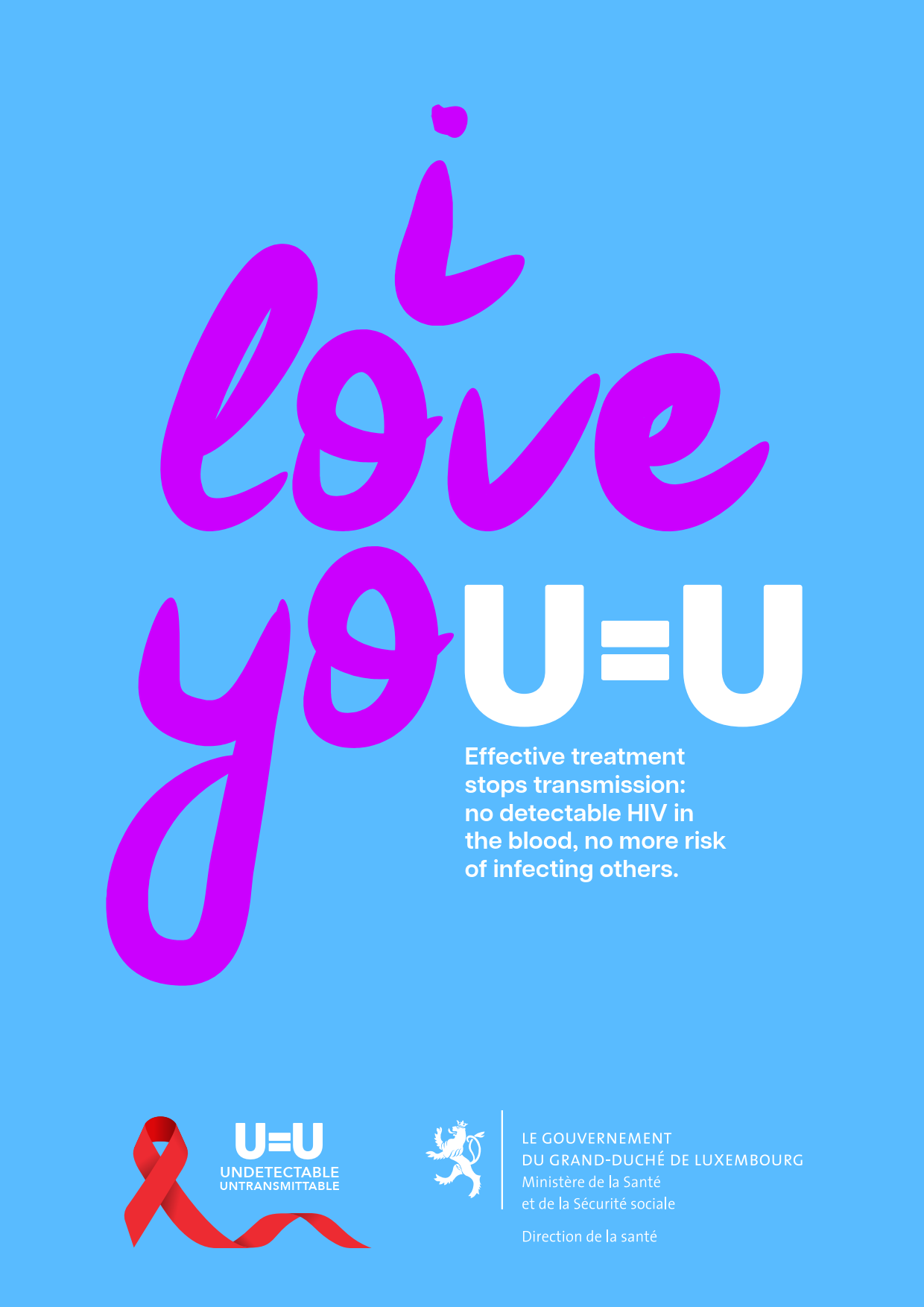
Without treatment, HIV-positive individuals can infect other people through sexual contact or blood. The extent to which the virus is transmitted depends on the viral load, which can be reduced to undetectable levels, thereby reducing the risk of transmission through sexual contact to zero.
The virus will then multiply by attacking the body's CD4 lymphocytes and using them to replicate and alter the infected person's immune system. Without treatment, the decline in the number of CD4 lymphocytes will facilitate the emergence of opportunistic diseases, which are characteristic of the AIDS stage.
Opportunistic diseases
Without antiretroviral treatment, HIV will suppress the immune system by reducing the number of CD4 lymphocytes to very low levels. The body will no longer be able to defend itself against organisms that are normally harmless for humans. The appearance of opportunistic diseases is directly and inversely correlated to the number of CD4 lymphocytes. These are essential for protecting the body from outside infections and cellular changes in the body. The appearance of opportunistic diseases marks the AIDS stage.
The most common opportunistic diseases are tuberculosis (in regions where it is endemic), pneumonias caused by parasites or fungi, cytomegalovirus infections or cytomegalovirus encephalitis, herpes, toxoplasmosis, skin and mucosa problems, numerous cancers and brain damage.
Means of prevention
HIV is an avoidable infection because its transmission can be prevented by using means that protect you and others. There are various preventive tools that can be more or less appropriate or preferable depending on the situation, sexual practices and their frequency.
Emergency treatment
If you have been in a situation with a high risk of HIV transmission within the last 72 hours, an emergency treatment known as post-exposure prophylaxis (PEP) is available, which significantly reduces the risk of HIV infection.
How do you get this emergency treatment?
If you have been in a high-risk situation, or have been exposed to a risk of HIV infection, go immediately (within 72 hours at the latest) to:
Publications


Multimedia

Last update