
Asian tiger mosquito
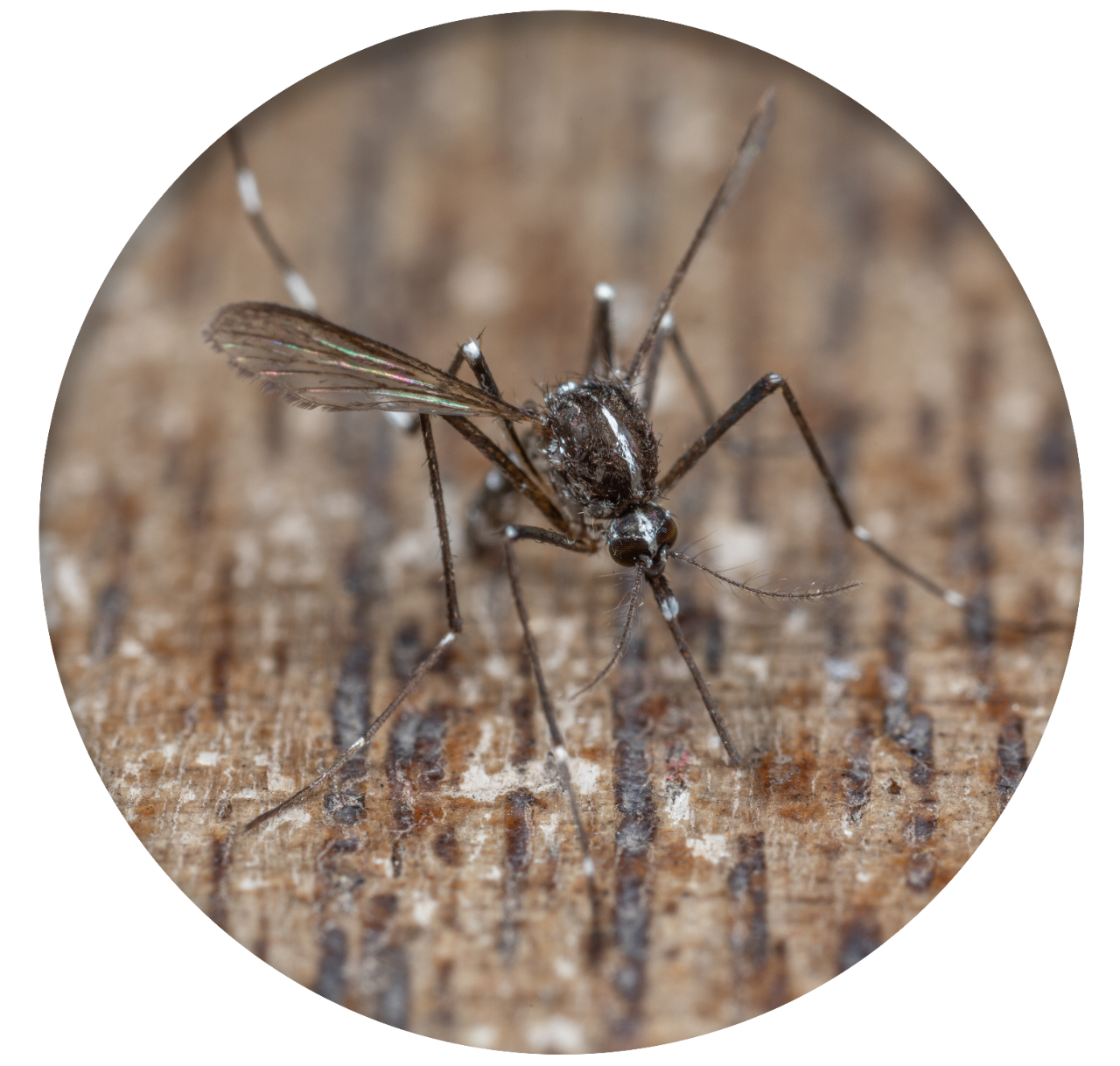
What Is the Asian tiger mosquito?
The Asian tiger mosquito (Aedes albopictus) is an invasive species native to the tropical forests of Southeast Asia.
Over recent decades, it has spread gradually across the world, particularly in Europe, largely as a result of international trade and travel.
Why is it a threat?
If an Asian tiger mosquito bites a person infected with a virus, it can become a vector and transmit the virus to other people through subsequent bites. Diseases it may transmit include:
- Dengue
- Chikungunya
- Zika virus disease
What is the risk of infection in Luxembourg?
- The Asian tiger mosquito has occasionally been detected in Luxembourg, but it is not yet established or breeding permanently in the country. At present, it does not survive the winter there.
- No cases of local, or autochthonous, transmission of diseases carried by this mosquito have been reported in Luxembourg. All cases recorded to date have been imported, involving travellers who were infected abroad.
- The mosquito is, however, already well established in neighbouring countries, particularly France and, more recently, parts of Belgium and Germany.
- In mainland France, local transmission of viruses such as dengue and chikungunya has been reported in areas where the Asian tiger mosquito is established. Such cases, which were sporadic for many years, have become more frequent since 2022 and have been reported increasingly further north.
- Although the Asian tiger mosquito is not currently established in Luxembourg, it may become more likely to settle there in the coming years. This is due in particular to increasingly favourable climatic conditions and the repeated introduction of mosquitoes through travel and the transport of goods.
- The possibility of local transmission of dengue, Zika or chikungunya therefore cannot be ruled out, and the risk may increase in the future.
- Local transmission could occur if a person infected abroad returned to Luxembourg while the virus was still present in their bloodstream and was then bitten by an Asian tiger mosquito. The mosquito could subsequently transmit the virus to other people through its bites.
How can you identify the Asian tiger mosquito?
The Asian tiger mosquito is relatively small and black, with distinctive white markings. It has a clearly visible white stripe running down its back (thorax), as well as striped legs. Its hind legs have five characteristic white bands.
It can be distinguished from Culex mosquitoes, which are common in Luxembourg. Culex mosquitoes are generally brownish and do not have stripes.
Unlike Culex mosquitoes, which are mainly active at night and around dawn and dusk and are often found indoors, the Asian tiger mosquito is generally active during the day. It tends to remain outdoors in vegetated, shaded areas and avoids direct sunlight.
How can you help prevent the Asian tiger mosquito from becoming established?
Eliminate sources of standing water where mosquitoes can lay their eggs.
- Remove or regularly empty flowerpot saucers, toys, buckets, old tyres and any other containers in which water can collect.
- Cover rainwater tanks with a lid or fine-mesh netting.
More information is available here:
Publications on preventive measures


Last update