
HIV - National Action Plan 2023-2028
Human Immunodeficiency Virus
The National Programme to Combat HIV (PNVIH) 2023-2028 is the continuation of the 3 previous multiannual plans (2006-2010, 2011-2015 and 2018-2022). Many actions have already been taken in Luxembourg in the fields of prevention, screening and care for people living with HIV, as well as in relation to HIV research in Luxembourg.
Key facts and figures
The transmission of HIV is still a major issue in Europe. Although considerable progress has been made since 2001, including a 37 % reduction worldwide in new infections and a 54 % decrease in AIDS-related deaths, the European Union saw a worrying rise in new infections in 2022. Almost 23,000 cases were diagnosed, a 30 % increase compared to 2021.
In Luxembourg, the number of new diagnoses in 2023 fell slightly (53 cases compared with 67 in 2022). New diagnoses primarily concern young adults, in particular men aged between 20 and 35 years old having sexual relations with other men, as well as people using injectable drugs (26-35 years old). Heterosexual transmissions affect a wider age range, from 26 to over 54 years old.
The PNVIH 2023-2028 hopes to have a significant impact in the response to HIV in Luxembourg, by implementing strategic measures and actions to achieve targets set by UNAIDS by 2030:
- 95 % of people living with HIV are aware of their HIV status,
- 95 % of HIV-infected people who are screened receive long-term antiretroviral treatment,
- 95 % of people receiving antiretroviral treatment have sustained viral load suppression.
Five strategic priorities for achieving specific objectives
Priority 1 - Prevention
Reinforce awareness of screening for HIV and other STIs, expand access to prevention tools such as condoms, PrEP and PEP, and reduce stigmatisation while promoting the inclusion of patients in healthcare systems.
Priority 2 - Screening
Facilitate access to HIV and STI screening, with particular emphasis on high-risk groups and by improving collaboration between screening and care services to ensure a smooth and effective transition for patients to suitable medical monitoring.
Priority 3 - Treatment and care of people living with HIV
Expand access to antiretroviral treatment and geographical availability of medicines and implement a monitoring system for people whose medical monitoring has been interrupted to guarantee continuous and effective care.
Priority 4 - Non-discrimination and inclusion
Set up awareness-raising and education programmes aimed at reducing stigmatisation and discrimination related to HIV, reinforcing self-confidence, providing skills and promoting active participation of these groups in the fight against stigmatisation.
Priority 5 - Monitoring and multidisciplinary research
Maintain an up-to-date epidemiological monitoring system for HIV and STIs in order to obtain robust epidemiological data so that the results achieved can be exploited for prevention purposes and a complete analysis can be produced of the epidemiological situation.
Campaigns
-
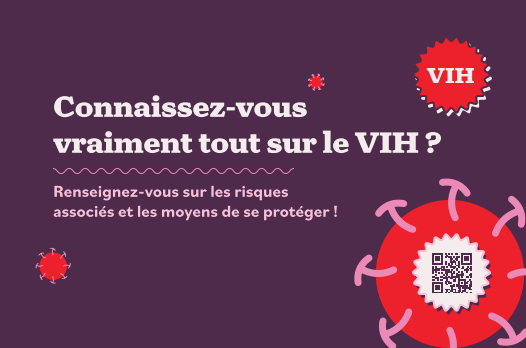
HIV prévention: les risques, le dépistages et la protection.
Chaque année et comme chaque 1er décembre est organisée la Journée mondiale du SIDA dans le monde entier. Dans ce contexte, une campagne de sensibilisation axée sur l’éducation du public, l'encouragement au dépistage régulier et la promotion des outils de...
-
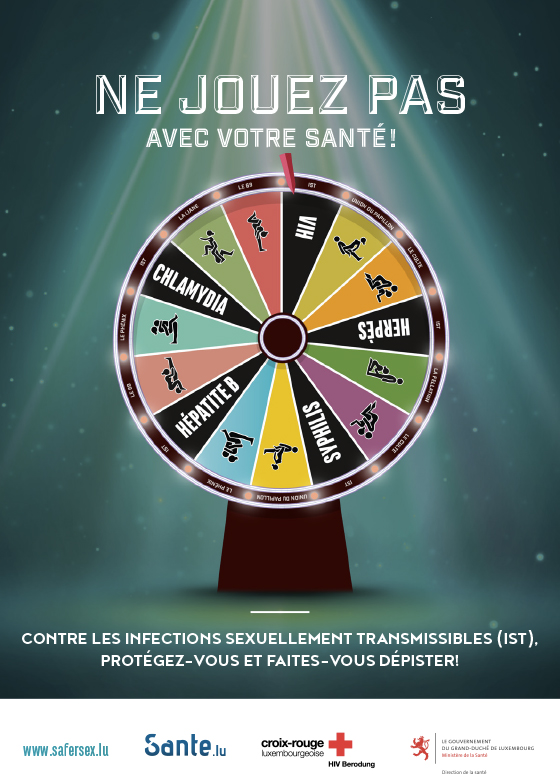
Infections sexuellement transmissibles
Gonorrhée, syphilis, infections à chlamydias, HPV (Human papilloma virus), VIH, herpès génital, hépatites B et C, sont des infections sexuellement transmissibles (IST) en recrudescence. C’est la raison pour laquelle, le ministère de la Santé lance chaque année une campagne de...
-
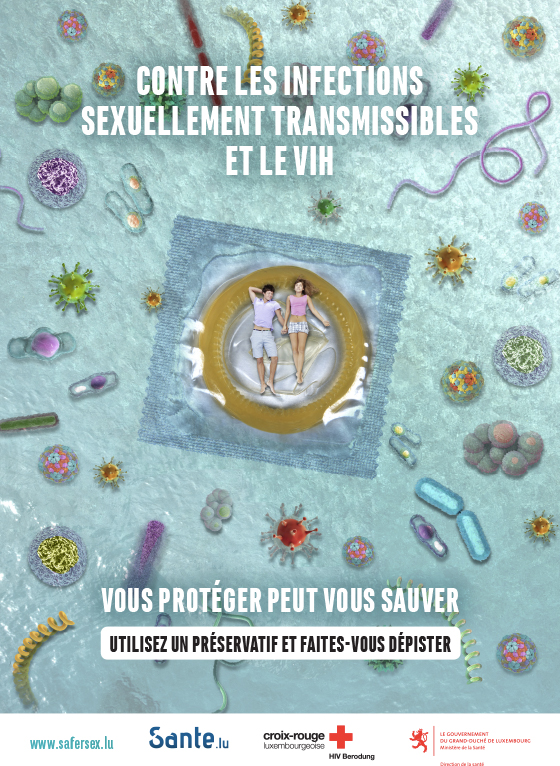
Contre les infections sexuellement transmissibles et le VIH!
L’été rime avec vacances et insouciance. La campagne estivale rappelle l'importance d'utiliser systématiquement des préservatifs lors de rapports sexuels occasionnels et met de nouveau l’accent sur le dépistage des infections sexuellement transmissibles (IST). Par infections sexuellement transmissibles on entend le...
-
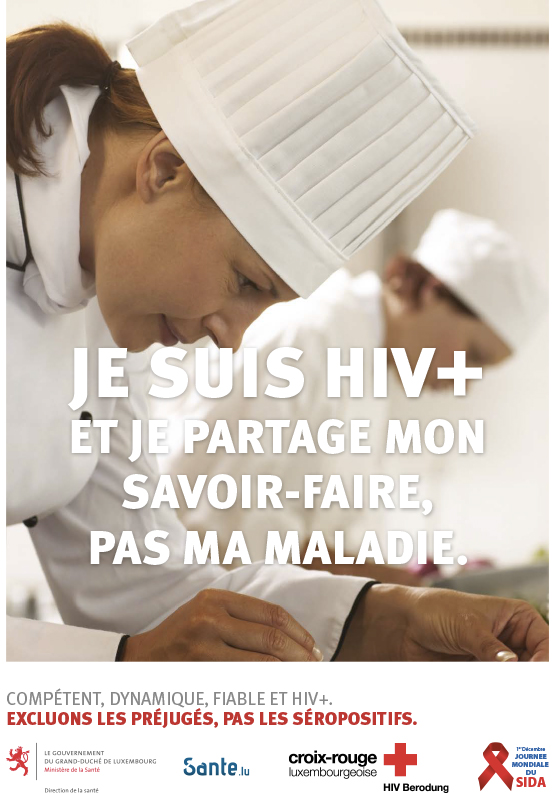
Campagne SIDA : une lutte contre la stigmatisation et l'exclusion sur le lieu du travail
De nombreuses personnes VIH+ vivent toujours dans la stigmatisation, la peur et l’exclusion. Pour cette raison, la campagne 2015 du ministère de la Santé cible la stigmatisation et la discrimination des personnes VIH+ sur leur lieu de travail. Objectifs de...

Last update