
Understanding radon
What is radon?
Radon is a naturally occurring radioactive gas that is colourless and odourless. It is formed by the decay of uranium-238, which occurs naturally in the earth's crust. Radon can easily escape from rocks and penetrate residential buildings through gaps in the building shell. The gas can accumulate in buildings, particularly in winter, when homes tend to be centrally heated and less well ventilated.
Radon: An invisible enemy
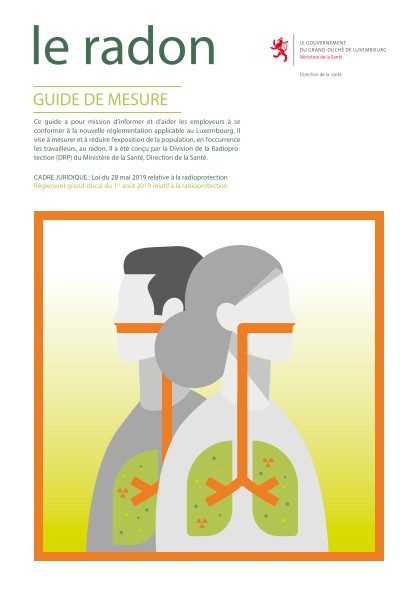
If inhaled, radon, and its radioactive derivatives in particular, can irradiate lung tissue. Over time, this radiation can cause lung cancer. In fact, radon is the second most common cause of lung cancer after tobacco. It has been recognised by the World Health Organization (WHO) as a human lung carcinogen since 1987. Animal experiments, as well as numerous studies on uranium mine workers, have shown that prolonged exposure to radon significantly increases the risk of developing lung cancer. All of the population-based case-control studies conducted in Europe, North America and Asia have also shown that the risk of developing lung cancer increases with the concentration of domestic radon and the duration of exposure to it.
It should be stressed that, according to European studies, the risk is multiplied even more in the case of smokers. Tobacco is an aggravating factor.
Publication
Last update