
Exposure to ionising radiation in Luxembourg
The graph below shows the average annual effective doses in millisieverts (mSv) received by the Luxembourg population, due to:
- natural radiation, the main source of which is radon;
- medical examinations;
- industrial applications.

Exposure to radon - Natural radiation
Radon is a naturally occurring radioactive gas. It is the main source of exposure to natural radiation. It comes from the ground. Based on geographical differences, human and animal exposure to this natural radiation can vary greatly from one location to another. In some parts of the world, exposure to radiation varies due to local geology.
Radon can also be released from certain building materials that contain naturally radioactive rock, such as certain types of granite, gneiss or basalt. As such, radon can also be detected in some houses.
Average radon concentrations in Luxembourg and Europe
In Luxembourg, the average concentration of radon in homes is:
- 50 Bq/m3 in the southern part of the country,
- 150 Bq/m3 in the northern part of the country.
The reference value, which is based on a recommendation published by the European Commission in 1990, is:
- 400 Bq/m3 for old housing;
- 200 Bq/m3 for new homes.
These figures are currently being amended.
Exposure to ionising radiation associated with medical procedures
The graph below shows the contribution of different types of scans to medical exposure. In 2002, the contribution of CT scans was estimated at 50 %, i.e. 1 mSv per person per year.

Annual number of standard CT procedures per 1,000 insured persons
Despite hospitals acquiring MRI scanners (medical imaging machines that use magnetic resonance instead of X-rays), the number of CT scans is increasing every year. The number is rising by almost 10 % annually.
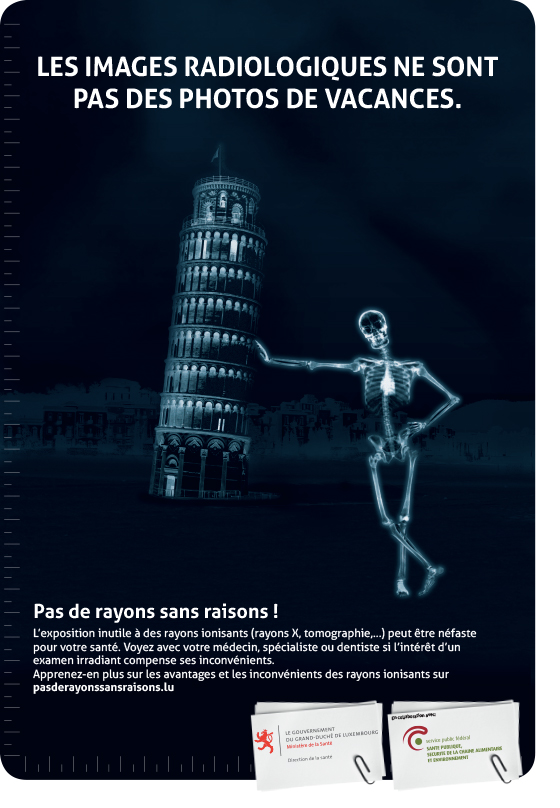
This is why it is important that these procedures are justified on medical grounds.

Last update