
Risks associated with exposure to radiation
Non-ionising radiation
Solar radiation
Solar radiation consists of UV-A rays (320-400 nm) and, to a lesser extent, UV-B rays (280-320 nm).
Natural and artificial UV rays act on our eyes and our skin. UV-A rays penetrate the skin more deeply and can cause the skin to age prematurely, whereas UV-B rays can cause sunburn.
UV rays cause various changes in the cells of the eye and skin. The most important change is genetic (DNA) damage caused by UV-B rays, which occurs even in cases of low exposure to UV rays, and well before sunburn. As a general rule, the cells' repair systems are able to repair the DNA damage that is caused. But frequent, prolonged and intense exposure to UV radiation, and repeated sunburns, overloads these systems. The damage caused is no longer completely or properly repaired, and can lead to permanent DNA changes (mutations). This increases the risk of skin cancer. UV radiation from the sun and artificial UV radiation from sunbeds are therefore classified by the International Agency for Research on Cancer (IARC) in the highest risk group, i.e. risk group 1, 'carcinogenic to humans'.
Ionising radiation
Ionising radiation is a type of energy that has enough force to remove electrons from atoms or molecules, which leads to the formation of ions and free radicals. This type of radiation includes high-energy particles such as alpha particles, beta particles and neutrons, as well as electromagnetic waves such as X-rays and gamma (γ) rays.
Ionising radiation can damage living tissue and DNA, and has effects that are both beneficial and harmful to human health.
- The beneficial uses of ionising radiation include medical imaging and radiotherapy for cancer treatment.
- The harmful effects of ionising radiation include radiation sickness, genetic mutations and an increased risk of cancer. It should be noted that these mutations can have hereditary effects. This has not been demonstrated with any certainty in humans, but it has been demonstrated in other mammals.
The amount of ionising radiation to which a person is exposed is measured in grays (for gamma rays or X-rays), and the related risk level is expressed in sieverts (Sv). The effects of radiation on human health depend on the type of radiation and the amount of exposure. It is important to take the necessary precautions to reduce exposure to ionising radiation to a level that is as low as reasonably achievable (ALARA), for instance by wearing protective clothing and using protective equipment in areas where radiation is present, and following safety instructions for medical and industrial applications of ionising radiation.
Radon
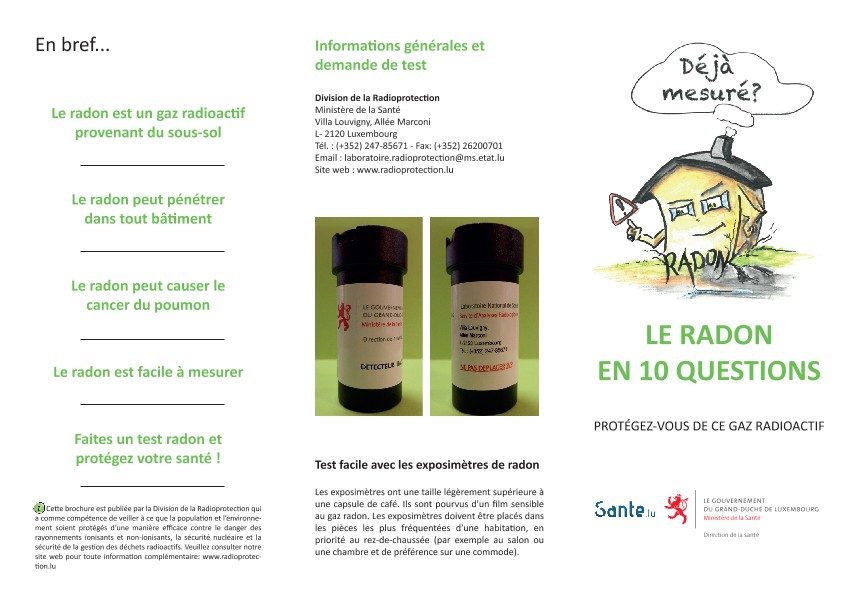
Radon is a radioactive gas that occurs naturally in the soil. It is invisible and odourless, but we are at risk of breathing it in.
Radon irradiates the pulmonary tissues, which can cause lung cancer.
Last update