
Dementia

Objectives
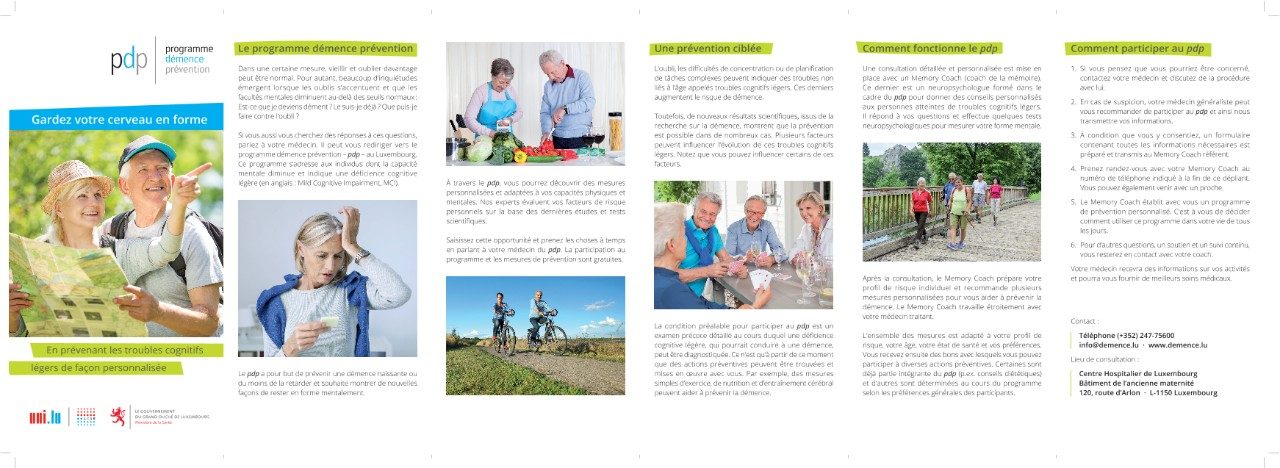
The Dementia Prevention Programme (pdp) aims to tackle the development of memory problems through a range of preventive measures.
The pdp provides those affected with long-term support and advice (see Target audience). The pdp provides this assistance in close cooperation with the individuals' doctors.
The pdp was launched in June 2015 by the Ministry of Health.
Target audience
The programme is aimed at people with mild memory problems and those who have already been diagnosed with mild dementia. The latter might have cognitive difficulties but these ought not to be insurmountable on a day-to-day basis.
Collaboration with doctors
The decision to enrol a participant in the pdp is made in consultation with the attending physician. Indeed, it is the doctor who submits an application on behalf of their patient, with the latter's consent. Patients do not apply to take part in the pdp themselves directly.
Programme costs
It is free and voluntary to take part in the pdp. The Ministry of Health pays the costs of participating in the pdp.
Preventing dementia
Preventive measures can be used to slow the development of memory issues. However, the effectiveness of these measures depends on many individual factors (including, for example, general state of health, lifestyle, physical exercise, environment, and genetics). For this reason, the pdp develops a tailored programme for each and every participant.
If, despite these preventive measures, dementia were to manifest itself with all the known symptoms, the participant and their loved ones would be better prepared to deal with the situation thanks to the pdp. Participants will have the chance to make the necessary arrangements and express their wishes regarding where they live and how they are looked after, and with regard to their finances.
Although the pdp does not provide medical care, it can help ensure continuity of care by referring participants to appropriate information providers and care centres.
Diagnosis
As part of the pdp, participants are examined by a neuropsychologist who will assess their memory and draw up an individual risk profile. If necessary, the doctor can also arrange for further examinations.
Medication and prevention
To date, there are no drugs specifically designed to prevent dementia. Nevertheless, by using different preventive measures, it is possible to take action when memory issues arise.
There are some medications such as lipid-lowering drugs (used to reduce blood cholesterol levels to bring them closer to normal values) that are thought to have an indirect positive effect on the progression of dementia.
Only the patient's doctor can recommend the use of specific medicinal products.
Partners
The pdp cooperates with partners on the ground in the areas of
- cognitive training
- physical and social activities
- dietary advice
- social assistance
These partners, from both medical and non-medical backgrounds (general practitioners and specialists, hospitals, sports associations, clubs for the elderly, municipalities and others), offer a wide range of activities that can be useful in preventing dementia.
National action plan

Last update