
Generic medicinal products
Difference between generic and original medicinal products
Original medicinal products
An original medicinal product is a medicinal product developed by a pharmaceutical company based on a new active ingredient that it has found.
It then files a patent, which generally lasts for 20 years. This gives the pharmaceutical company temporary commercial exclusivity (intellectual property), in return for the publication of the innovation.
When the patent expires, the medicinal product falls into the public domain. It can then be copied by another pharmaceutical laboratory.
Generic medicinal products
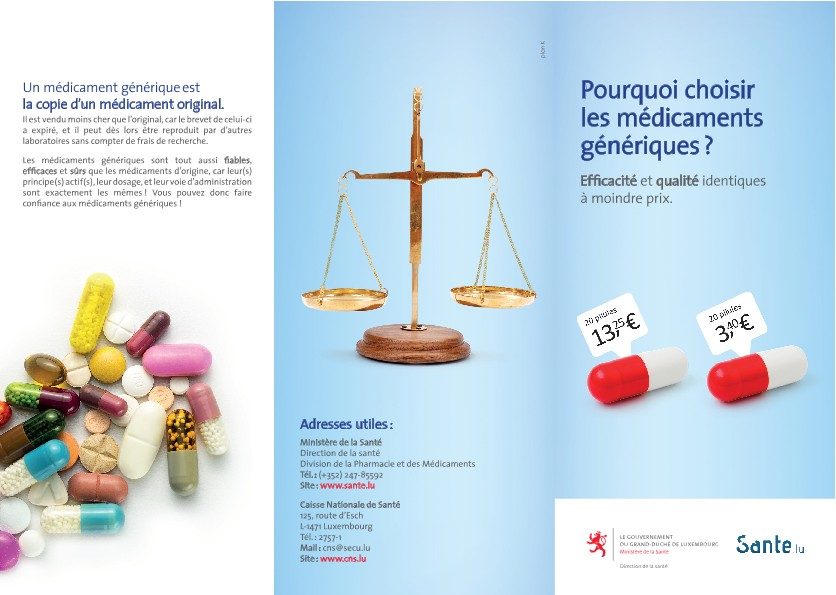
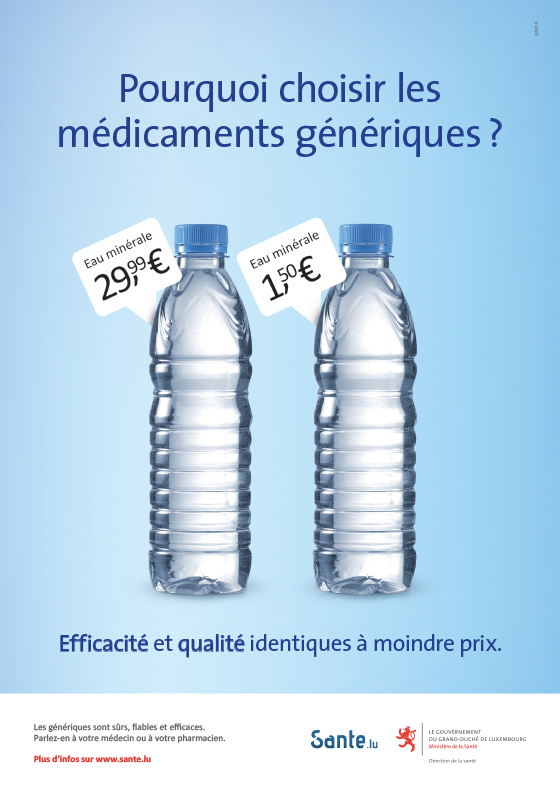
A generic medicinal product is a copy of an original medicinal product. Generic medicinal products are less expensive, because their production does not involve any research and development costs. In contrast, lengthy and costly research is needed to discover original medicinal products.
Generic medicinal products are just as reliable, effective and safe as original medicinal products, because their active ingredient(s), their dosage and their method of administration are exactly the same.
Substitution of medicinal products
Substitution means that pharmacists must inform patients when a less expensive generic medicinal product – i.e. a medicinal product with the same active ingredient – is available on the market.
For a prescribed medicinal product to be substitutable, it must belong to a group of substitution medicinal products.
Pharmacists must inform patients that the mandatory dispensation of substitution medicinal products does not affect the doctor's prescription, and that substitution medicinal products are reliable and effective.
Patients can choose to accept or refuse substitution medicinal products.
Medicinal product substitution policy
The medicinal product substitution policy, provided for under the government programme, aims to achieve the right balance between adequate and effective treatment and the financial sustainability of the healthcare system.
It is one of the measures introduced in the reform of the healthcare system. The aim of this reform is to make the best use of the financial resources of the National Health Fund (Caisse nationale de santé - CNS), manage changes in the overall cost of health and maternity insurance, and ensure the sustainability of our healthcare system.
The practice of substitution is becoming increasing common throughout Europe, and involves prescribing physicians, pharmacists and patients.
Patient's contribution and reimbursement
- The Health Directorate (Direction de la santé) has drawn up a list of substitutable medicinal products.
- Based on this list, the CNS has set a reference amount on which the patient's contribution is calculated.
- Depending on the medicinal product that the doctor has prescribed, the pharmacist will offer the patient the choice to substitute a prescribed original medicinal product with a less expensive generic medicinal product.
- If the patient refuses the substitution, they will have to pay the difference between the basis for reimbursement that has been set, and the public price for the medicine dispensed, in addition to the contribution that is calculated based on the basis for reimbursement.
Publications
Last update