
Antibiotics
Antibiotics are medicinal products that inhibit the growth of, or kill, bacteria, and are used to treat infections in humans, animals and sometimes plants. Antibiotics are used to treat bacterial infections (e.g. pneumococcal pneumonia or staphylococcus infections). Medicinal products that are used to combat viral infections (e.g. HIV or herpes) are known as antivirals.
Antibiotic resistance
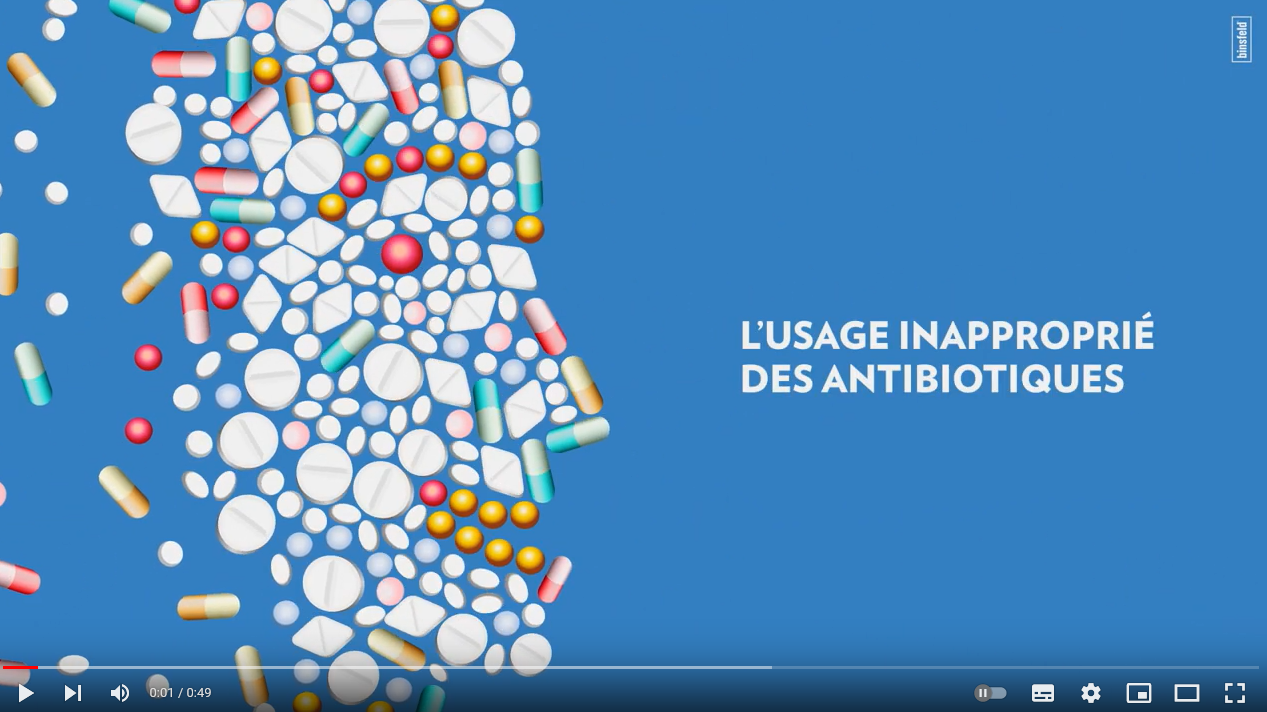
Antibiotic resistance is one of the greatest threats to public health in Europe, and is due to the misuse of this class of medicinal products. A growing number of infections caused by germs that have become resistant to antibiotics are becoming increasingly difficult to treat, since antibiotics are losing their effectiveness.
Antibiotic resistance leads to longer hospital stays, higher medical costs, and higher mortality and morbidity rates.
Each year, in Europe, 33,000 people die from an infection caused by antibiotic-resistant bacteria. Worldwide, the number of deaths attributable to antimicrobial resistance (including antibiotics) is estimated at 1.7 million.
We are currently facing an emergency situation: the over-use and misuse of these ‘miracle drugs' in human and veterinary medicine threatens their long-term effectiveness. As such, it is all the more important to improve the awareness and understanding of, and accountability for, the issue of antimicrobial resistance.
Extent of the problem – the current situation as regards the treatment of certain diseases
Antibiotic resistance is now reaching dangerously high levels worldwide. New resistance mechanisms are appearing and spreading around the world, compromising our ability to treat common infectious diseases.
For a growing number of infections, such as pneumonia, tuberculosis, gonorrhoea, septicaemia and food-borne diseases, treatment is becoming more difficult, or even impossible, as a result of the loss of antibiotic efficacy.
In countries where a prescription is not required for humans or animals, the problem of the emergence and spread of resistance is more serious. Similarly, in countries where there are no harmonised therapeutic guidelines, antibiotics are over-prescribed by healthcare professionals and veterinary surgeons, and over-used by the general public.
Focus on fluoroquinolone antibiotics
Fluoroquinolone antibiotics can cause serious side effects affecting, among other things, the nervous and cardiac systems, tendons, muscles and joints. These side effects are very rare but serious and can occur within two days of starting treatment, but can even occur several months after stopping treatment. Doctors should only prescribe these medicines to patients for their approved uses.
Patients who have already experienced a serious side effect with a fluoroquinolone should not take any fluoroquinolone-based medicines.
For more information on what to do, please see the flyer below.
Publications


'One-Health' approach to combating antibiotic resistance
As humans and animals constitute overlapping reservoirs of resistance, the Luxembourg government has advocated an integrated 'One Health' approach.
Following the joint efforts of the Ministry of Health and the Ministry of Agriculture, Viticulture and Rural Development, a National Antibiotics Plan (2018-2022) has been developed and extended to 2024 because of the COVID-19 crisis. It focuses on various strategic priorities such as governance, prevention, education, communication, treatment and diagnosis, as well as monitoring and research.
In line with the ‘One Health’ approach, this National Plan aims to encompass the many various dimensions of the phenomenon – human, veterinary and environmental - including all stakeholders. It is essential that everyone does their part to provide a solution to this problem by applying the principle of rational use of antibiotics.
In addition, to promote the rational use of antibiotics in veterinary medicine in Luxembourg, several actions need to be undertaken in the future, such as producing reliable statistics on the effective use of antibiotics on farms, introducing high levels of biosecurity on farms, and using vaccines that are available for certain pathologies in animal husbandry.
FAQ

Last update