
Individualised support plan (PAI)
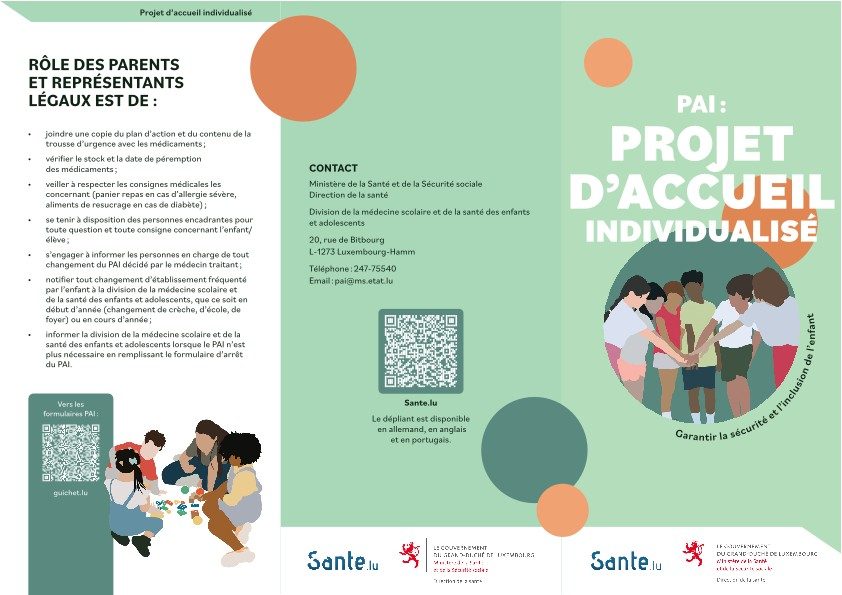
The individualised support plan (projet d’accueil individualisé - PAI) was launched in 2015 with the aim of improving support for and the integration of children with specific health needs in educational (primary and secondary level) and care establishments.
Every child and adolescent has the right to be fully integrated into the educational system, and to be afforded opportunities enabling the best possible development of their competencies and the fulfilment of their aspirations, in conditions that protect their health.
A PAI is a detailed protocol specifying:
- The conditions in which support is provided;
- The actions to be undertaken;
- The medicines to be administered;
- The emergency plan to follow;
- The first aid measures to administer;
- The persons to contact in case of emergency, or questions about the PAI or the child's health.
Limit of intervention
- Interventions recorded by the doctor
- Essential interventions
- Interventions that must take place in the school or care setting
Who is concerned?
Children and adolescents with a chronic disease or specific health needs.
Implementing the PAI requires a formal delegation of care – which must be dated and signed by the parents – and a medical prescription issued by the child's GP, specifying the medication to be administered, as well as its dosage and frequency, and the actions to be undertaken repeatedly, or in case of emergencies. Any specific conditions of care should also be specified.
Publication
Last update